Skylight Repair Los Angeles
Leaking skylight? We diagnose and fix the actual problem across greater Los Angeles. Flashing repair, glazing replacement, leak diagnosis. Most repairs completed same week.
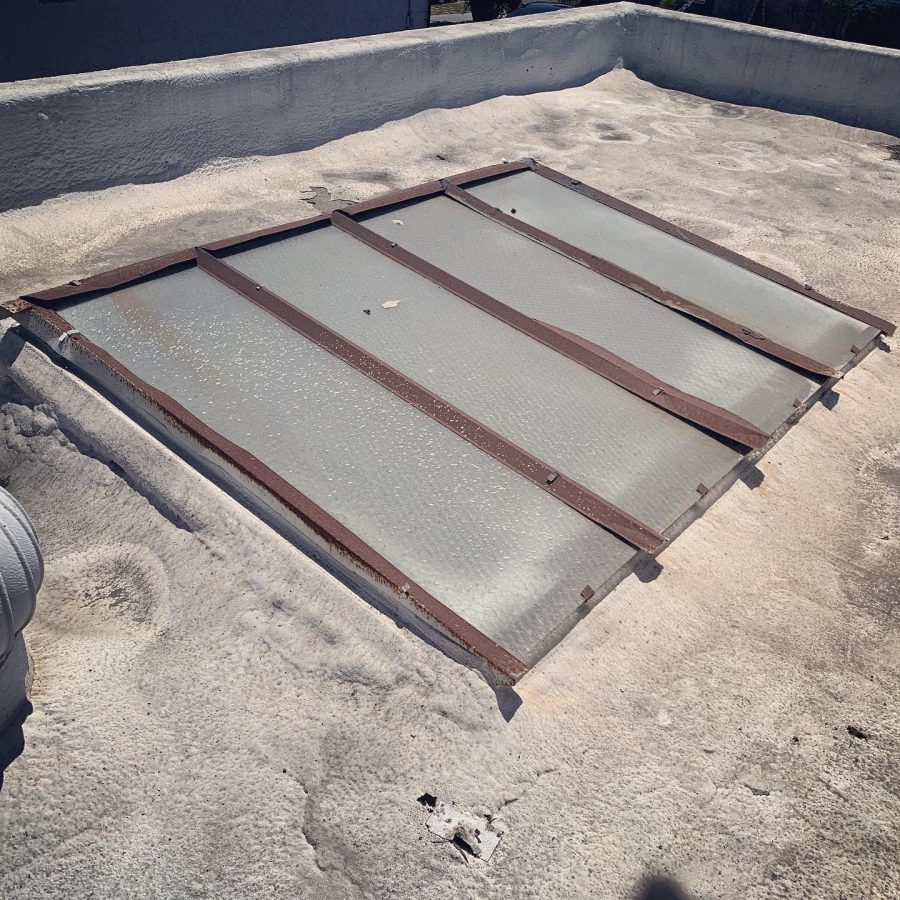
Most leaking skylights don’t need to be replaced. They need to be diagnosed correctly.
One of the most common things we see is a homeowner being told the skylight itself has failed when the actual problem is the flashing around it. The glass is fine. The frame is fine. Water is finding its way through a failed detail somewhere above or around the unit.
We’ve diagnosed hundreds of skylight leaks across Los Angeles. The majority aren’t product failures, they’re installation failures. Knowing the difference is what determines whether the right repair gets done the first time.
Before we recommend anything, we figure out where the water is actually coming from.
Why Skylights Leak
Most skylight leaks fall into a handful of categories.
Failed Step Flashing
This is the most common problem we encounter. Step flashing is the series of metal pieces woven into the roofing material along the sides of the skylight. Its job is to direct water safely around the opening. When it’s installed properly, water never reaches the vulnerable parts of the skylight assembly. When it’s installed incorrectly, or begins to deteriorate, water eventually finds a path inside. Many of the leaks we repair can be traced back to this single issue.
Head Flashing Problems
The second most common failure occurs at the uphill side of the skylight. Water flowing down the roof needs to be diverted around the skylight and back onto the roofing system. If the head flashing is missing, undersized, or improperly integrated, water can enter from above and show up inside the home long before the source becomes obvious.
Condensation Mistaken for a Leak
Not every water problem is a roof leak. In some homes, especially during colder weather, moisture forms on the interior surface of the skylight and drips onto the frame or drywall. From inside the room it can look exactly like a leak. The solution is completely different, which is why proper diagnosis matters. One of the first things we’ll determine is whether you’re dealing with water intrusion or condensation.
Repair or Replacement?
This is usually the first question homeowners ask. Our answer depends on the condition of the skylight itself.
Repair Usually Makes Sense When:
- The frame is still in good condition
- The glazing is intact
- The leak is coming from flashing or waterproofing details
- The skylight is otherwise functioning normally
This describes the majority of leaking skylights we inspect.
Replacement Usually Makes Sense When:
- The glazing is cracked
- The frame is warped or deteriorated
- The skylight is nearing the end of its service life
- Repair costs approach replacement costs
If replacement is the better long-term option, we’ll tell you. If a repair is all that’s needed, we’ll tell you that too.
Common Skylight Repairs
We regularly perform:
- Step flashing repairs
- Head flashing repairs
- Full perimeter re-flashing
- Leak investigations
- Curb repairs
- Glazing replacement
- Seal replacement
- Storm damage repairs
The appropriate repair depends entirely on what’s causing the problem. That’s why we inspect before recommending a solution.
What Skylight Repair Costs
Most repairs are significantly less expensive than replacement. Typical repair ranges include:
- Step flashing repair: $350–$650
- Tile roof flashing repair: $500–$900
- Head flashing repair: $250–$450
- Full perimeter re-flash: $700–$1,200
- Glazing replacement: $400–$900
The final cost depends on roof type, accessibility, skylight design, and the extent of the repair required. We’ll provide pricing before any work begins.
Why Skylights Leak, The Four Failure Modes We See Most
Most skylight leaks we diagnose fall into one of four categories. Understanding which one applies determines whether repair is the right move or whether the system needs to be pulled and reinstalled correctly.
1. Step Flashing Failure
Step flashing runs along the sides of the skylight where it meets the roof surface. When it’s installed incorrectly, or not installed at all, with sealant used in its place, water finds its way under the roofing material and into the opening. This is the most common failure we see. Caulk does not substitute for properly integrated step flashing.
2. Counter-Flashing and Saddle Failure
The saddle, or cricket, behind a skylight diverts water around the uphill side. When it’s missing or undersized, water ponds behind the unit and eventually finds a path through. Counter-flashing that wasn’t properly embedded in the skylight frame has the same result.
3. Condensation Misdiagnosed as a Leak
Not every moisture problem around a skylight is a roof leak. When warm interior air contacts the cold underside of a single-pane or older acrylic unit, condensation forms and drips, often in the same location as a real leak. Diagnosis requires distinguishing between the two before any repair work is proposed.
4. Glazing Seal Failure
Older dual-pane units develop fogging between panes when the edge seal fails. This is a glazing failure, not a flashing failure. The fix is glass replacement, not re-flashing. Misidentifying the cause leads to repair work that doesn’t solve the problem.
Velux, CrystaLite, Solar Industries, Repair Coverage


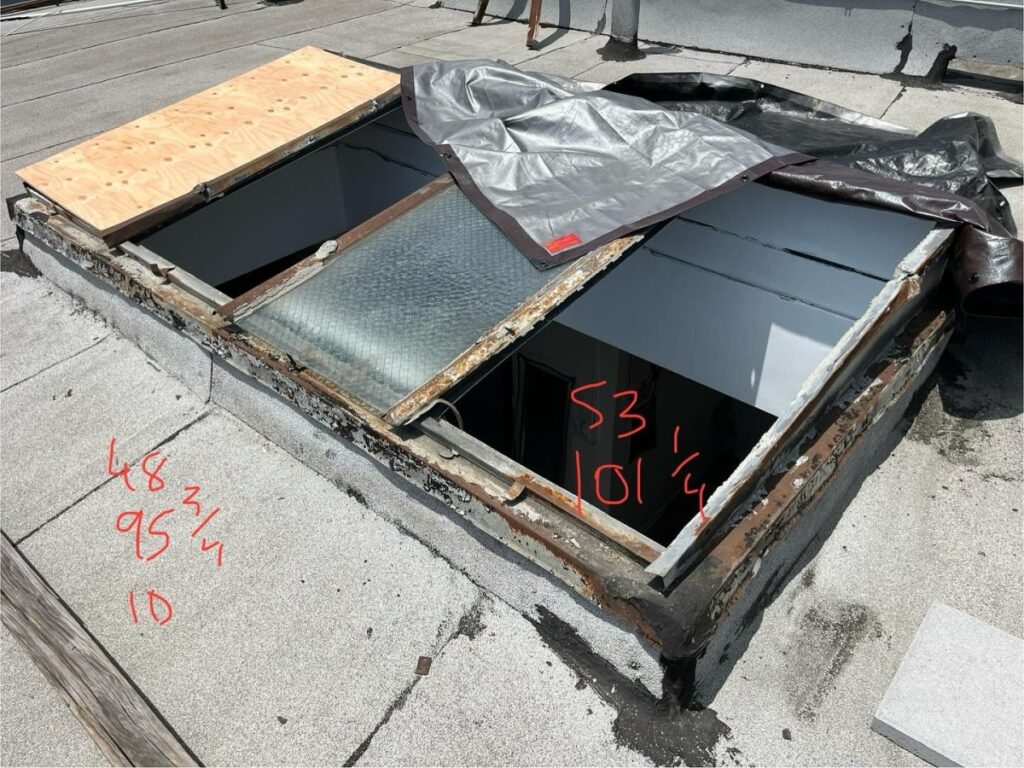
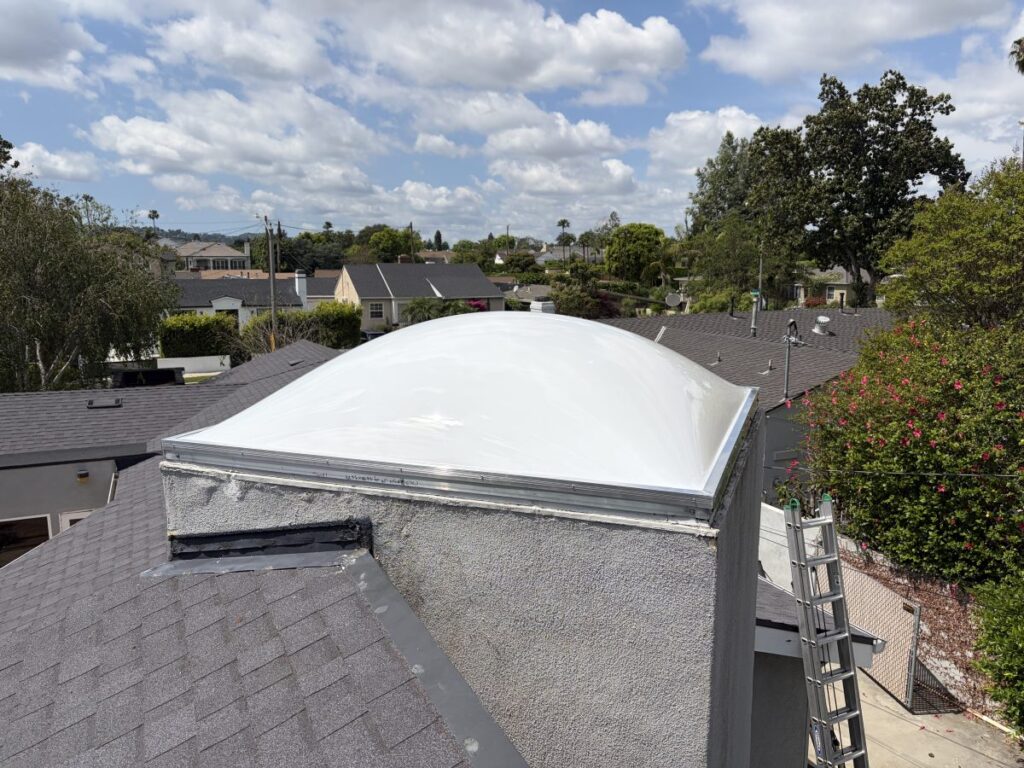
We repair systems from every manufacturer we install: Velux, CrystaLite, Solar Industries, Kingspan Light + Air, Lane-Aire, and older acrylic dome systems. Parts availability varies by age, we’ll confirm before the estimate whether manufacturer components are still available or whether fabrication is required.
Frequently Asked Questions
Can you diagnose my leak over the phone?
Sometimes we can narrow down the likely cause. Where the water appears, when it appears, and how long the problem has existed can provide useful clues. However, an accurate diagnosis requires an on-site inspection. We’ll evaluate the skylight, flashing, roofing materials, and interior staining patterns before making recommendations.
Do I need roof work at the same time?
Not necessarily. If the surrounding roof is in good condition, a targeted skylight repair is often the right solution. If the roof is approaching the end of its service life, coordinating repairs with future roofing work may make more financial sense. We’ll explain what we see and let you decide how you’d like to proceed.
How quickly can you come out?
For active leaks, we can usually schedule an inspection within the same week. Emergency tarping and temporary weather protection may be available sooner when conditions require immediate action. We’ll provide the most accurate timeline when you contact us.
Serving: Los Angeles · Pasadena · Glendale · Sherman Oaks · Santa Monica · Beverly Hills · Malibu · Silver Lake · Culver City