Why Skylights Leak
The real reasons skylights leak in Los Angeles. Flashing failures, product failures, and roof failures — what can be repaired and what needs replacement.
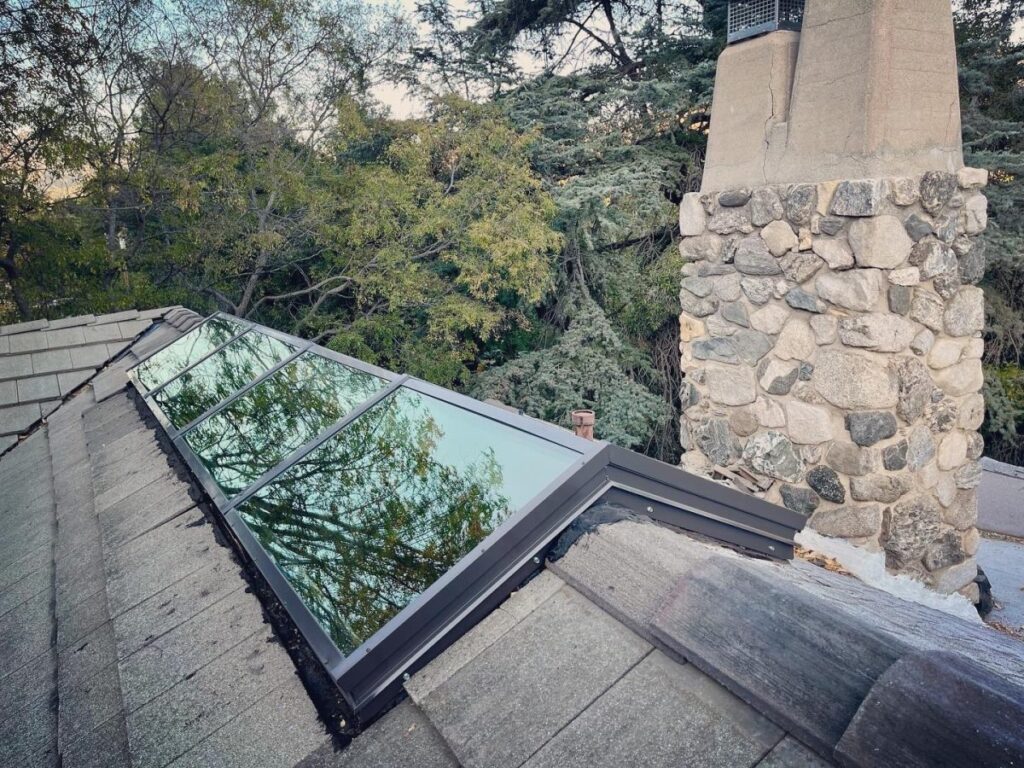
After 20 years of diagnosing skylight leaks across Los Angeles, the breakdown is consistent: roughly 70% of leaks are flashing failures, 20% are roof failures adjacent to the skylight, and 10% are product failures. The implication matters: most leaking skylights do not need to be replaced. They need their flashing fixed.
Flashing Failures
Step flashing runs up the sides of a skylight, alternating between a metal flashing piece and each shingle or tile course. When it is installed correctly, it creates a mechanical barrier that sheds water away from the opening regardless of what the sealant does. When it is installed incorrectly, or when it corrodes over time, water finds its way in.
The most common failure modes we see: step flashing that was installed without integrating properly with each shingle course, relying on caulk to compensate; counter-flashing at the head that is undersized or improperly lapped; and kick-out flashing at the bottom that is missing entirely, allowing water to run behind the flashing rather than out onto the roof.
Caulk is not flashing. Any installation that relies on caulk as the primary water barrier will eventually leak. Caulk has a service life of 5–10 years under California sun. Properly installed metal flashing lasts the life of the roof.
Roof Failures
Sometimes the skylight is not the problem, the roof around it is. A compromised shingle field, a cracked tile, or a deteriorating membrane adjacent to the curb can all produce water that appears to come from the skylight. We check the roof condition around the unit before diagnosing the flashing, because the wrong diagnosis leads to the wrong repair.
Product Failures
Actual unit failures are less common than most people expect. The failure modes we see: cracked glazing from impact or thermal stress; frame corrosion on aluminum units in coastal environments; failed gaskets or seals on older venting units; and delamination of older laminated glass. Unit failures generally require replacement rather than repair.
Condensation, Not a Leak
Condensation is frequently misidentified as a leak. If water appears on the interior glazing or frame during cold nights or early mornings, that is condensation, water vapor from inside the home condensing on the cold glazing surface. It is not water penetrating from outside. The fix is improved ventilation or a venting skylight, not flashing repair.
How do I know if my leak is flashing or condensation?
Condensation appears on the glass surface and frame during temperature differentials, typically at night or early morning. It does not correlate with rain. A flashing leak appears during or after rain and typically produces water at the perimeter of the unit or at a specific location. If your leak only happens during rain, it is almost certainly a flashing or unit failure, not condensation.